Game development company in Oman
Game development company in Saudi Arabia
Best Game Development Company in Bahrain
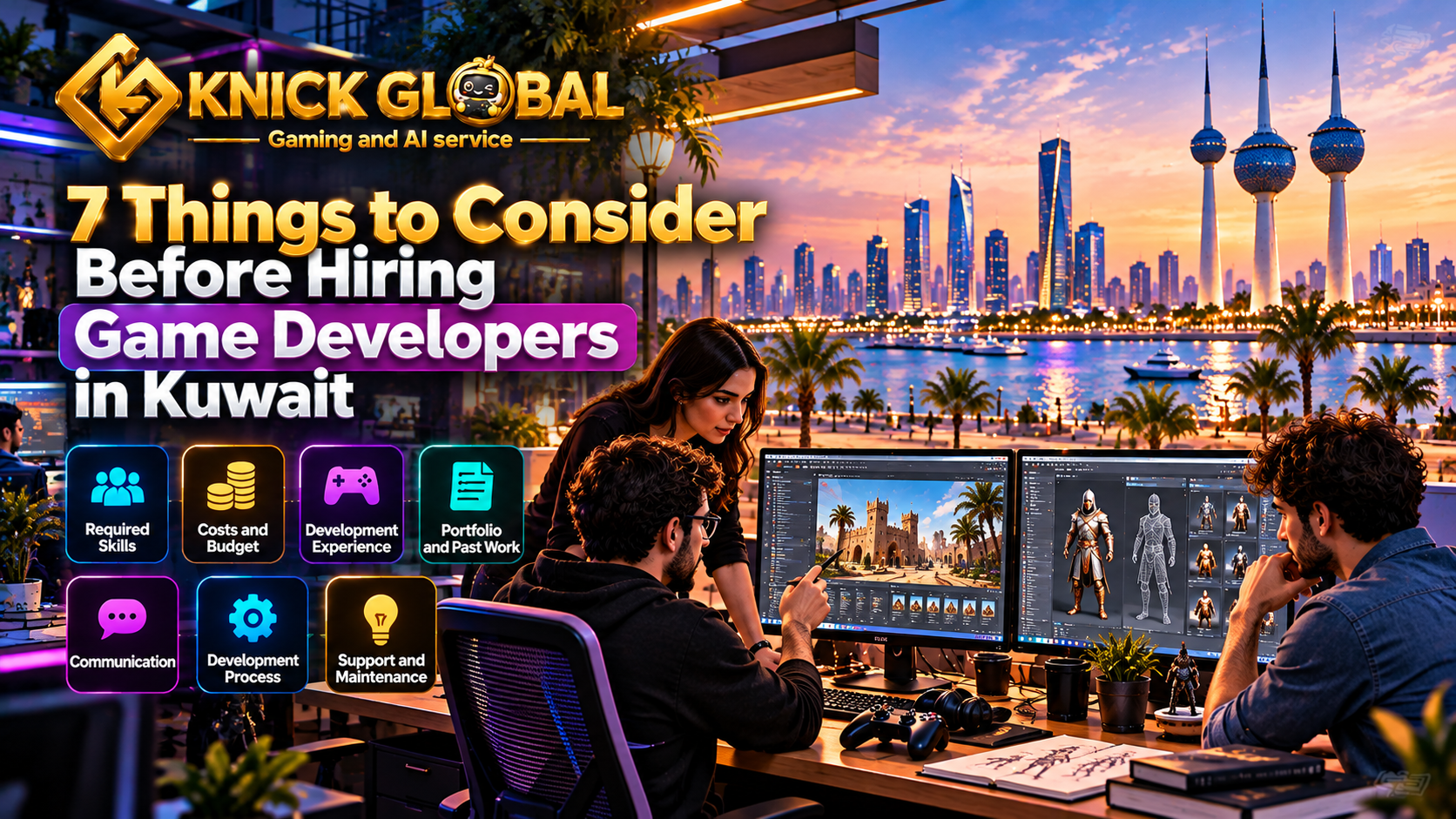

The success of a game depends on more than an exciting idea or attractive graphics. It requires the right development team, a practical budget, suitable technology, and a clear understanding of what players expect. For businesses planning to enter Kuwait's growing digital entertainment market, choosing the right professionals can determine whether a game becomes a sustainable product or an expensive experiment.
Before deciding to Hire Game Developers in Kuwait, businesses need to evaluate several factors, from technical expertise and cultural relevance to communication and long-term support. A careful hiring process helps reduce development risks, control costs, and create games that match business goals. These seven considerations provide a practical starting point for making an informed decision.
Not every game development team has the same strengths. Some specialize in casual mobile games, while others focus on multiplayer systems, 3D environments, educational games, or competitive gaming platforms. The right choice depends on the project's complexity and intended audience.
A team with experience in similar projects can anticipate technical challenges before they become expensive problems. For instance, a multiplayer game requires reliable networking, matchmaking, server management, and anti-cheat measures. A simple puzzle game may place greater emphasis on responsive controls, level design, and player retention.
Before selecting a game development company in Kuwait, businesses should examine the team's previous work and technical capabilities.
Important areas to evaluate include:
A portfolio should demonstrate more than visual quality. It should show how the developers handle performance, usability, and technical limitations.
Knick Global, for instance, can be considered in the context of evaluating game development capabilities across different project types. The key is to assess any potential partner against the specific requirements of the proposed game rather than relying on general claims.
The development engine and supporting technologies influence performance, production time, maintenance, and future expansion. Selecting tools without considering the project's requirements can create limitations later.
Unity and Unreal Engine are two widely used options. Unity is often suitable for mobile games, 2D experiences, and projects that need broad platform support. Unreal Engine is known for its advanced rendering capabilities and is frequently used for visually demanding 3D games. However, neither engine is automatically the best choice for every project.
The decision should reflect the intended gameplay, target devices, available budget, and developers' experience.
Businesses should discuss the following technical details before hiring:
A game development company in Qatar may also be suitable for a project that requires comparable technical capabilities, particularly when businesses are assessing teams across multiple GCC markets. The important consideration is whether the proposed technology fits the game, not simply where the developers are based.
A well-chosen technology stack makes future improvements easier and helps prevent unnecessary redevelopment.
A development quotation rarely tells the complete financial story. The initial estimate may cover design and programming but exclude server expenses, ongoing maintenance, marketing assets, content updates, or platform-related requirements.
Businesses planning to hire game developers in Qatar should request a detailed cost breakdown before approving a project. This makes it easier to compare proposals and understand where the budget will be spent.
The final cost depends on several factors:
The hiring model also affects the budget. Fixed-price contracts can work well when the scope is clearly defined. Time-and-materials arrangements offer greater flexibility when requirements may change, although they require closer budget monitoring.
A useful proposal should identify deliverables, payment milestones, exclusions, and the process for approving additional work.
Businesses comparing a game development company in Bahrain, a game development company in Oman, or a game development company in Saudi Arabia should evaluate the total project cost rather than focusing only on hourly rates. A lower quotation may not represent better value if it excludes essential services.
The most reliable budget is one that accounts for development, testing, launch, and continued operation.
Localization involves more than translating menus into Arabic. A successful game should feel natural to its intended audience while remaining accessible to players who prefer other languages.
Kuwait's audience includes players with different ages, interests, gaming habits, and language preferences. Research helps businesses understand these differences before investing heavily in development.
Cultural relevance can influence character design, dialogue, storytelling, reward systems, and promotional content. Arabic language support may require right-to-left interface layouts, appropriate typography, and careful handling of text inside menus and notifications.
Several details deserve attention:
These considerations are relevant to any game development company in Kuwait serving a regional audience. They also matter when projects target several Gulf markets, where shared cultural elements coexist with differences in language preferences and player expectations.
For example, a family-friendly mobile game may benefit from straightforward Arabic instructions, familiar social interactions, and age-appropriate rewards. A competitive multiplayer title may need clear matchmaking rules, responsive controls, and dependable online performance.
Localization should be considered during early design discussions. Adding it at the end can lead to interface changes, extra testing, and avoidable costs.
Even highly skilled developers can struggle to deliver a successful game when responsibilities and expectations aren't clear. Communication affects every stage, from concept approval to final testing.
Before hiring a development team, businesses should understand how the project will be managed. Regular updates and documented decisions reduce confusion and make it easier to identify delays before they affect the entire schedule.
A dependable workflow should include:
Time-zone differences may be manageable when teams operate remotely, but meeting schedules and response expectations should still be agreed upon. A game development company in Qatar or another GCC market may offer convenient regional collaboration, although location alone doesn't guarantee effective project management.
Businesses should also ask how delays are handled and who makes decisions when requirements change. These details are especially important for games tied to a campaign, seasonal event, product launch, or scheduled business initiative.
Strong communication creates accountability. It also helps both parties address problems while they're still manageable.
A game can look impressive in a presentation and still perform poorly on actual devices. Controls may feel awkward, levels may be unbalanced, and online features may fail under heavy traffic. Testing helps identify these problems before they affect the wider audience.
Quality assurance shouldn't be limited to the final week of production. It should continue throughout development, with each playable build reviewed against agreed requirements.
A comprehensive testing process may include:
Feedback should lead to measurable improvements. If players repeatedly abandon a tutorial, the instructions may need to be simplified. If a level causes widespread frustration, its difficulty may require adjustment.
For projects involving a game development company in Oman, a game development company in Bahrain, or another regional provider, the same testing standards should apply regardless of the team's location.
Businesses should request a documented testing plan and clear criteria for approving the final build. A release should only proceed when critical defects have been addressed and essential features work as agreed.
A game's release isn't the end of its development journey. Operating system updates, player feedback, new content, and security concerns can create ongoing work. Businesses should therefore evaluate the long-term relationship before signing a contract.
Intellectual property is one of the most important issues. The agreement should explain who owns the source code, original artwork, animations, sound assets, documentation, and other project materials. It should also identify any third-party components that come with separate licensing conditions.
Before committing to a development team, businesses should confirm:
A game development company in Saudi Arabia, for example, may be assessed alongside providers in Kuwait when a business needs a team capable of supporting a regional launch and future updates. The comparison should include contractual clarity and post-launch responsibilities, not only initial production speed.
Scalability also deserves attention. A small game may begin with a limited audience but later require additional servers, new monetization features, or support for more devices. Good technical planning makes these changes easier to manage.
Clear ownership terms and dependable maintenance arrangements protect the investment long after the first release.
Hiring the right team requires careful attention to technical skills, budget, localization, communication, testing, and long-term support. Businesses that plan to Hnire Game Developers in Kuwait should compare proven capabilities and documented processes rather than relying on price alone. These decisions shape the game's quality, market fit, and future costs. As Kuwait's digital entertainment opportunities develop, a well-defined project brief and thorough partner evaluation can help businesses build sustainable gaming products. Reviewing portfolios and support agreements is a practical place to begin.